


The shift
It was never the work.
 A letter from Vito Peleg, founder of Atarim
I built my first client sites from the back of a van. We were touring Europe in a band, and somewhere between soundcheck and the show I would park near a McDonald's, borrow the WiFi, and push changes for a client who had sent me a screenshot of a screenshot. This was before 4G. It was a long time before I understood what I was actually fighting.
I thought it was the work. It was never the work.
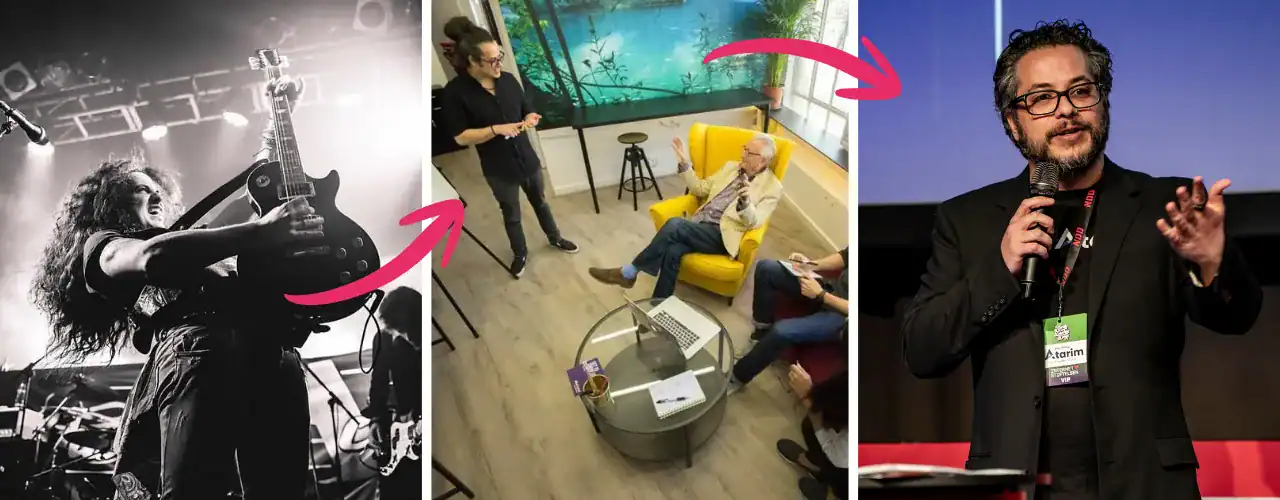
Six hundred plus client projects later, as an agency owner, I can tell you what ate my week. Chasing feedback out of people who send voice memos. Re-explaining scope for the third time. Writing a proposal at nine at night. A two-hour call about a blurry email signature. If you run a small shop, or you run it alone, you know the split. Fifteen, maybe twenty percent of the week is the craft you got into this for. The rest is holding the whole thing together with your hands.
Here is what took me eighteen years to see. The agencies that get ahead of their clients are no better at the craft. They have people. Someone whose job is the check-in. Someone holding the detail. Someone doing QA before it ships. Someone chasing the money. One person cannot do the work and get ahead of it at the same time. There are only so many hours in a week, and there were never enough.
So good people stay stuck, and they think it says something about them. It does not.
Then the ground moved
You probably have your own version of this story. A client you had looked after for years rebuilt a microsite over a weekend with an AI builder and asked you to point the DNS at it. Or a prospect's nephew did it in an afternoon and your eight thousand dollar proposal suddenly needed a seminar attached. One agency owner told me the word for how that felt was disrespect. I think he was exactly right, and I think it is worth sitting with before anyone tries to sell you a fix.
2026 Web Designer Survey, 20i. 500 US web designers.
I will concede the hard part. Some of that work is gone. Mostly it is the work that was making you the least money and costing you the most patience, but it is gone, and pretending otherwise is how you lose the room.
Most of us did the sensible thing next. We bought the AI tools. We built the prompt libraries. We got faster. I did this too. And nothing else changed, because faster at the wrong column is still the wrong column. The client was still waiting for you to notice. The report still went out late. You still found out something broke from an email that started with "is the site down?"
That was the realisation for me. It was never about speed. It was that nobody was watching the client while I was busy doing the work.
 Is the site down?
 Sorry, on it now.
And where is this month’s report?
Coming by Friday.
Sorry, on it now.
And where is this month’s report?
Coming by Friday.
 Monthly report sent to Harbor Legal, under your brand.
7:02
Monthly report sent to Harbor Legal, under your brand.
7:02
 4 plugins updated overnight. Backup taken first.
3:40
4 plugins updated overnight. Backup taken first.
3:40
 Draft post in the client’s voice, waiting for your okay.
6:15
Draft post in the client’s voice, waiting for your okay.
6:15
 Found it first: the contact form stopped sending on mobile. Fix ready for your yes.
8:01
Found it first: the contact form stopped sending on mobile. Fix ready for your yes.
8:01
What the weekend client actually found
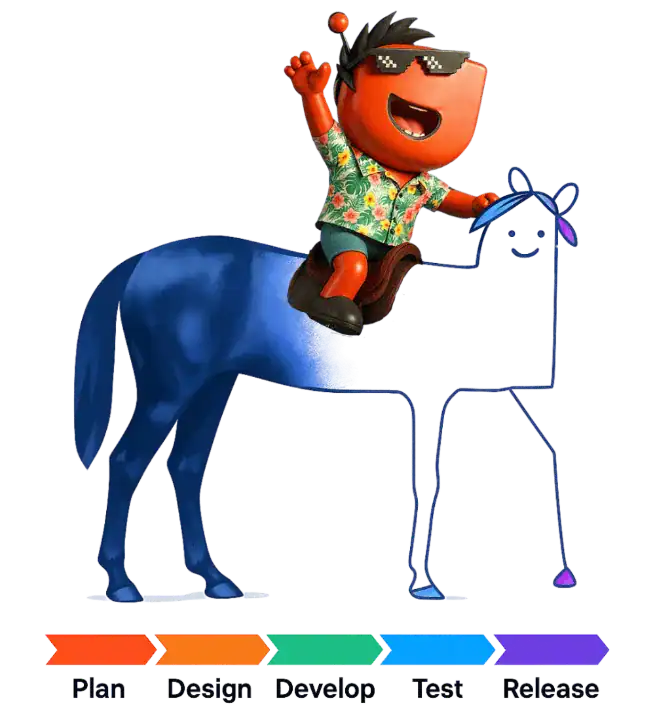
Here is the more interesting truth about the client who built it themselves. They have not left the market. They have just discovered how much there is to do. The form that stopped sending. The plugin that needed a backup before the update. The page that reads wrong to a search engine. The thing that drifted for six weeks before anyone looked. They found out that a website has to be looked after, every week, by someone who is paying attention. And that is the moment they need someone to own the outcome rather than someone to do the typing.
Nadine, who has run her agency for fifteen years, put it better than I ever have: high-value clients are not buying software. They are buying accountability. An AI cannot get on a call and take the blame when a launch stalls.
Which brings me to the part I resisted longest, and I suspect you might too. If I am not the one doing the work, what am I worth?
You have already answered this once. The first time you paid a contractor to build a page, you did not stop being valuable. The client did not care who moved the pixels. They cared that it was right, that it was on time, and that you would pick up the phone. My value was never the doing. Neither is yours. Nobody says the director didn't make the movie.
How I know this works
Over the past two years I built another agency, doing a million dollars a year, running the way I wish my first one could have. We ran it on Atarim, our own software, with our own money and our own clients on the line. Every client got looked after the way you look after your best one. Reports before they asked. Fixes before they noticed. New work scoped and priced and sitting on the desk, ready to pitch.
We called it "getting high on our own supply".
The reason I could do it the second time and not the first is simple, and it has nothing to do with getting smarter. I had a team. Account managers, developers, designers, QA on everything, and the time to build systems. That is the entire difference, and it is out of reach for almost everyone in this industry.
That is what we have been building at Atarim, for web agencies, since 2019. That team, as something you can plug into your agency. More than a thousand of those clients now run on it. So does our own website. We put our own business on it before we asked anyone else to.
Six AI specialists, one for each discipline an agency runs on: design, copy, SEO, UX, QA and project management. Point them at a site on your books and they learn what that client is trying to do, work out what the site needs and when, and get on with it, all under your brand. You decide what runs on its own and what waits for you. Nothing reaches a client without your okay.
Glitch
QA and code
 Index
SEO
Navi
UX and accessibility
Claro
Project management
Lexi
Copy
Index
SEO
Navi
UX and accessibility
Claro
Project management
Lexi
Copy
 Pixel
Design
Pixel
Design
The shift, then
AI is what made this possible. The shift itself is older and more human than that. It is moving from being the pair of hands to being the one who owns the outcome. From waiting to be told to being the one who noticed first. From a business that runs on your presence to one that runs whether you are in the room or not.
Looking after every client the way you look after your best one was never a question of effort or talent. It was impossible without a team. That is what just changed.
If you want to see what it would do for one of your clients, paste your agency's URL. No card, no signup, not even an email at the first step. It will show you the plan it would run. Then you decide.
The AI web agency.
Plugged into yours.
Paste your agency's URL. Atarim studies your agency, shows you what it learned, and rebrands itself as you. Before you sign up.
Free. No card. See what your AI agency would do before you sign up.